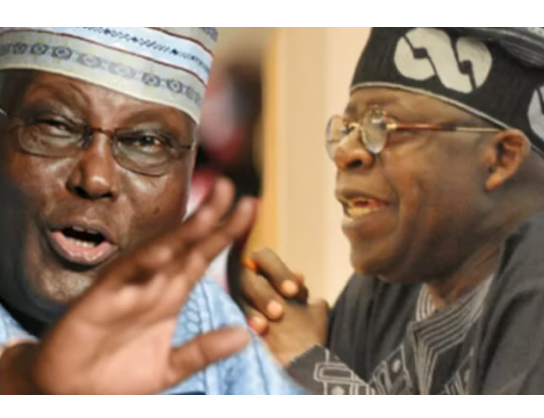
Former Vice President Atiku Abubakar has criticised President Bola Tinubu’s 30-day petrol discount, describing it as an inadequate response to years of economic hardship and warning that Nigerians will judge the administration’s performance in the 2027 general election.
Atiku, the presidential candidate of the African Democratic Congress (ADC), argued that a temporary reduction in petrol prices could not reverse the rising costs of food, transportation, electricity and business operations.
He insisted that Nigerians needed sustainable economic relief rather than what he described as a temporary palliative introduced amid preparations for the next general election.
Speaking on Friday at the inauguration of the ADC Presidential Campaign Council in Abuja, Atiku accused Tinubu of adopting the principle behind his proposed production subsidy after previously criticising it, but failing to incorporate the necessary safeguards.
“Thirty days cannot erase three and a half years of hardship. Nigerians have heard your excuses and endured your failed promises. They are ready to judge your record,” Atiku said.
The former vice president challenged the President to explain what would happen when the 30-day discount expired and whether the initiative would lead to lower transport fares, reduced costs of moving agricultural produce and cheaper business operations.
Atiku recalled that when he proposed targeted support to reduce fuel costs, the Tinubu administration had dismissed the idea as economically unworkable.
“When I proposed targeted support to ease fuel costs, you called me ignorant of economic policy. Your government said it could not be done. Now, in a desperate and clumsy retreat, you have shamelessly embraced the principle you mocked. You owe me an apology,” he said.
Outlining his alternative approach, Atiku said government support should be restricted to petroleum products refined locally and sold within Nigeria, with strict financial controls and transparency measures.
“My alternative is clear. Support petroleum products actually refined in Nigeria and sold to Nigerians. Cap the support. Put it in the budget. Audit it independently. Exclude imports. Show the public what it costs and what they save,” he stated.
He also called for broader economic interventions to reduce food prices, improve electricity supply, create jobs, expand business opportunities and strengthen security on roads and farms.
According to him, economic recovery must be measured by tangible improvements in household welfare and the ability of Nigerians to meet their basic needs.
Addressing members of the ADC Presidential Campaign Council, Atiku urged them to take the party’s message to markets, motor parks, farms, university campuses and communities across the country.
He tasked the campaign team with explaining the party’s proposed policies, demonstrating how they would be financed and persuading Nigerians of the need for political change.
Atiku described the 2027 election as a decisive contest over the welfare and future of Nigerian families, urging eligible voters to support the opposition party.
“Another four years of Bola Tinubu means another four years of hunger, hardship and national decline,” he declared.
Beyond economic issues, the ADC presidential candidate called for electoral reforms to strengthen transparency and protect the integrity of votes ahead of the 2027 polls.
He demanded immediate public access to polling-unit results, live broadcasts of state and national collation proceedings, and independent audits of election technology before and after elections.
Atiku also advocated the establishment of an independent commission to investigate and prosecute electoral offences, alongside tougher penalties for vote suppression, result manipulation and electoral fraud.
He maintained that credible elections and accountable leadership were essential to restoring public confidence and addressing the country’s economic and political challenges.