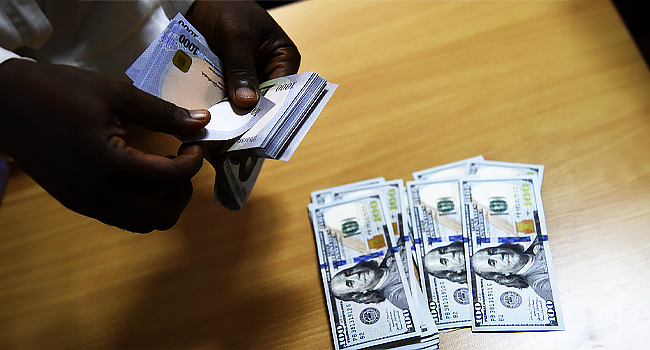
The Federal Government has again defended the removal of petrol subsidy, warning that its reinstatement could push the price of petrol to at least N2,000 per litre and the naira-dollar exchange rate to about N3,000 within months.
The Minister of Finance and Coordinating Minister of the Economy, Taiwo Oyedele, gave the warning on Thursday during a press briefing in Abuja on fuel prices and subsidy-related issues.
Oyedele said returning to the subsidy regime could weaken government revenues, trigger a sovereign credit downgrade, increase borrowing costs and lead to capital flight.
He said such developments could put pressure on the naira and undermine recent progress in reducing inflation.
“Return subsidy, and the sequence is familiar. Weaker revenues invite a sovereign credit downgrade. As the rating agencies themselves have already signalled, and you can read all their reports, that would put at risk the upgrade we have recently earned, including our first from S&P in 14 years,” Oyedele said.
“Borrowing becomes costlier, capital leaves, reserves fall, naira weakens. The progress on inflation, which has allowed the central bank to begin lowering interest rates, will be put at risk.
“Our estimate is that the exchange rate could approach N3,000 per dollar within months. And the so-called subsidised petrol will cost at least N2,000 per litre.
“This is well above what Nigerians pay today.”
The minister argued that reinstating the subsidy would only provide short-term relief while creating wider economic challenges, saying Nigerians could ultimately bear the cost through higher inflation and a weaker currency.
“However it is described, a subsidy must be financed through salaries and pensions not paid on time, through higher taxes, or through the printing of money, like we saw before this current administration. Over N30 trillion was printed. That’s inflation we’re dealing with. It wasn’t even just about the reform. Each of these has done great harm before,” he said.
Oyedele described short-term relief without sustainable financing as a costly approach for the economy.
“Short-term relief, but with long-term fragility, is the most expensive money a government can spend,” he said.
Calls for the return of petrol subsidy have continued more than three years after President Bola Tinubu’s administration announced its removal.
Oyedele, however, challenged proponents of a subsidy reversal to provide details on how the policy would be financed and its impact on petrol prices.
“We remain open to ideas, but any credible proposer should answer three questions. Number one, what will it cost? Number two, how will it be funded sustainably? Number three, what pump price will it deliver? We will engage in good faith with any proposer that shows its arithmetic,” he said.