






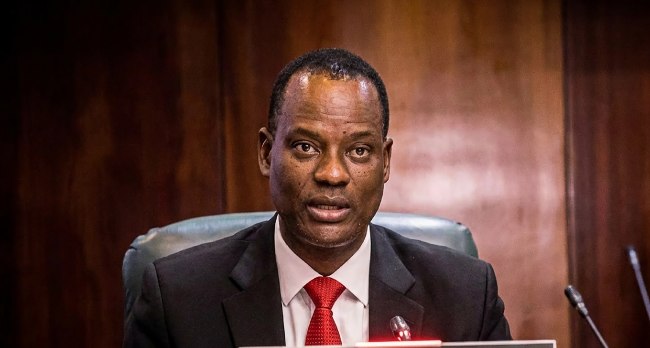




A former Permanent Secretary of the Federation Civil Service Commission, Goke Adeboroye, has blamed weaknesses in Nigeria’s bureaucratic system for the failure to detect a fake presidential agency that allegedly penetrated the government structure.
Adeboroye’s comments followed the discovery by the Independent Corrupt Practices and Other Related Offences Commission (ICPC) of the purported Presidential Foreign Intervention Promotion Council (PFIPC), which allegedly operated with forged appointment letters and other official documents.
The ICPC said the agency had no legal basis and that its purported Director-General, Adeniyi Adeyemi Matthew, was never appointed by the Federal Government.
The anti-corruption agency also uncovered another purported body, the National Brands Development and Made in Nigeria Special Project Office, which was allegedly operating from the Office of the Secretary to the Government of the Federation.
Reacting to the development, Adeboroye said the incident exposed serious weaknesses in the government bureaucracy, particularly the fact that an individual could allegedly gain access to the system, secure an appointment, obtain budgetary provisions and acquire office space without the irregularities being detected.
“The exposure of that fake presidential agency is a major lapse to say that somebody can actually come into the system, get in on the budget, get offices, and all of that,” he said during an interview on Channels Television’s Inside Sources.
Adeboroye identified weaknesses in the bureaucratic structures supporting key offices within the Presidency, including the Office of the Secretary to the Government of the Federation, the Office of the Chief of Staff to the President and the Office of the Head of the Civil Service.
He said the bureaucracy in these offices must have the capacity to support the President’s policies while also providing effective checks against fraudulent or unlawful directives.
“The bureaucracy in those offices are not strong enough to be able to help the President drive the vision at the speed and with the efficiency that he wants,” he said.
The former permanent secretary also highlighted the delicate relationship between political appointees and career civil servants. While political office holders issue directives as principals to the bureaucracy, he said civil servants must have the professional competence and integrity to question instructions that do not follow established procedures.
“The political office holders are principals to the bureaucracy, and a lot of times, the bureaucracy takes directives from them,” Adeboroye said.
He added that the system requires civil servants who are not only professional but also committed to its integrity and capable of exercising sound judgement.
Adeboroye further argued that civil servants should be able to identify suspicious communications purportedly originating from the Presidency because they are familiar with the established channels for transmitting presidential approvals.
“Whether the person brings fake or whatever, you as the civil servant should be trained to be able to detect what should be a genuine communication from the State House. You work in that system,” he said.
According to him, presidential approvals typically pass through established channels involving senior government officials.
“When the President approves anything, he always minutes to about three people. He goes to the Chief of Staff, he goes to SGF, and if he has something to do with civil service, the Head of Service will have it,” he said.
Adeboroye said the existence of these channels should make it possible for officials to verify questionable directives before implementing them. He added that the failure to do so in the case of the fake agency suggested a breakdown in the government’s internal checks and verification mechanisms.
He said officials did not necessarily need a complicated process to verify the authenticity of the purported directive, noting that a simple telephone call to the relevant office could have exposed the discrepancy.
“I could pick up a phone, call any minister, call this. It’s just a phone call from the office of whoever to say, Chief of Staff, is this true? And that would have actually corrected it,” he said.