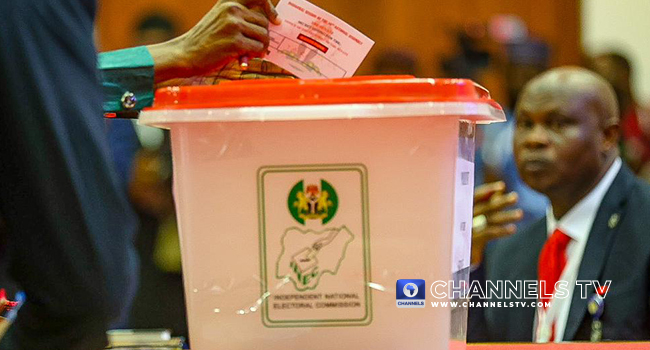




The Independent National Electoral Commission (INEC) has dismissed claims of ghost and hired voters during the Osun State governorship election, insisting that the use of the Bimodal Voter Accreditation System (BVAS) makes such practices impossible.
The Chief Press Secretary to the INEC Chairman, Dayo Oketola, also urged Nigerians to exercise caution over unverified information, images and videos circulating on social media following the election.
Speaking on ARISE NEWS on Monday, Oketola said the growing use of artificial intelligence, misinformation and disinformation had made it increasingly difficult to distinguish facts from fabricated content.
“We are in an age of AI, misinformation, and disinformation. Not everything you see is true. With BVAS in play for any election in Nigeria, there is no room for ghost voters or hired voters.
“You cannot vote in an election unless you have been registered and accredited for that specific polling unit. Be careful what you believe, particularly in an election driven by information management and mismanagement,” he said.
Oketola was speaking after the August 15 Osun governorship election, which was won by Governor Ademola Adeleke. The governor polled 511,067 votes to defeat his closest challenger, All Progressives Congress candidate Bola Oyebamiji, who secured 444,815 votes.
Osun Records 50.116% Turnout
Oketola said the election recorded a voter turnout of 50.116 per cent, describing the figure as higher than those recorded in several recent off-cycle elections.
He acknowledged voter apathy as a persistent challenge in Nigeria’s electoral process but said the Osun election demonstrated that effective preparation and logistics could encourage greater voter participation.
“Regarding voter apathy: yes, we know voter apathy is a major problem in Nigerian elections. Apathy does not reward poor governance; it enhances it. When people do not turn out to vote, they give their voice to the minority,” he said.
According to him, Osun recorded one of the highest voter turnouts among recent major off-cycle elections since 2015.
“According to our records, we had a 50.116% voter turnout in that election. It is better than other off-cycle elections that have been conducted. This shows that when solid preparedness meets collective resilience on the part of the electorate, people turn out. The lesson is to plan very well—get your planning and logistics right,” Oketola said.
He reiterated that INEC’s official figure was based on the number of collected Permanent Voter Cards (PVCs) and accredited voters.
“As the Independent National Electoral Commission, our official voter turnout record is 50.116%.
“That is based on the number of PVCs collected and the number of voters accredited.
“Voter turnout in that election was well above 50%, which is higher than the overall average,” he added.
‘Consistent Level of Maturity’
Oketola said the peaceful conclusion of the election, despite tensions and fears during the campaign, reflected what he described as growing maturity in Nigeria’s democratic process.
“Despite the fearmongering and the tension-soaked campaign in the run-up to the election, the Osun election has come and gone, and a winner has been declared. For me, this marks a consistent level of maturity for Nigeria’s democracy,” he said.
He stressed that INEC’s primary responsibility was to conduct elections in accordance with the law.
“Our concern before, during, and after any election is to conduct a free, fair, credible, and inclusive election guided by the legal framework—the Constitution, the Electoral Act, and our regulations.
“The legal framework allows for legal steps to be taken by candidates who may be dissatisfied with the outcome. That is not a source of concern for us because the law provides for it. Naturally, INEC will be a party to the suit, because we acted as the referee in the match,” he added.
2027 Elections
Looking ahead to the 2027 general elections, Oketola said recent off-cycle elections had provided opportunities for INEC to test and improve its preparedness.
“Our mandate is to conduct credible elections for Nigerians. Recent off-cycle elections serve as test runs for 2027.
“INEC is prepared to deliver free and fair elections, but we require the cooperation of all stakeholders.
“Political parties must refrain from practices like vote-buying. When security agencies manage threats effectively and INEC is allowed to operate without unnecessary interference, standard electoral processes can be maintained,” he assured.