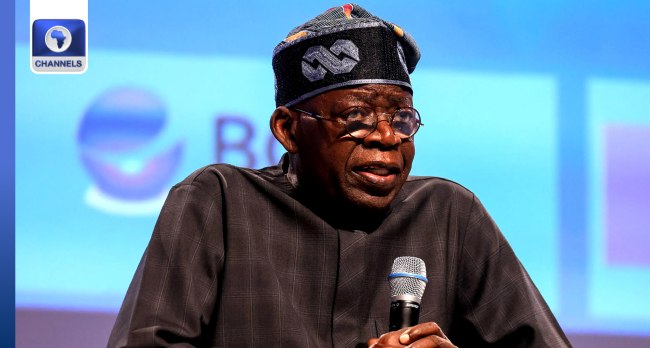



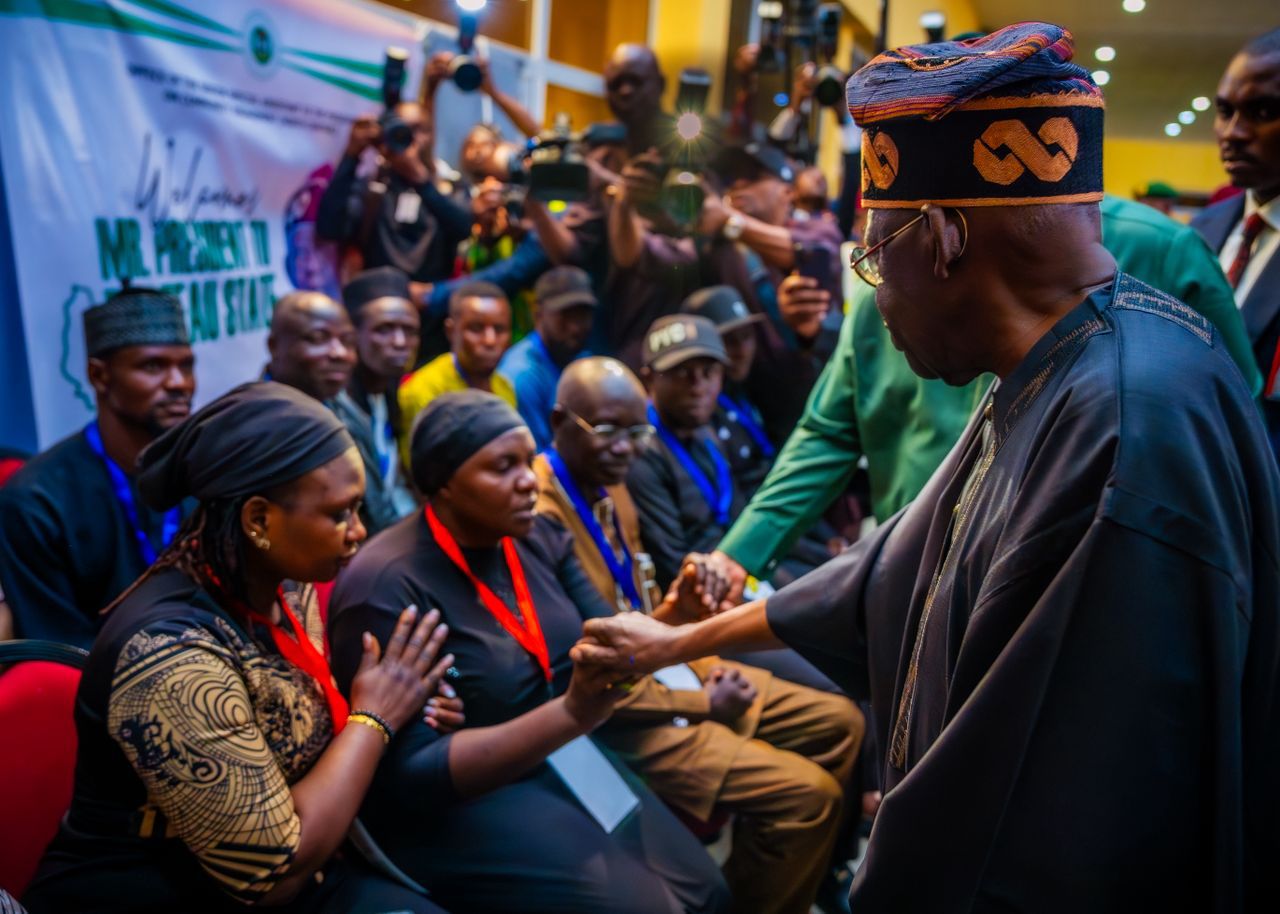

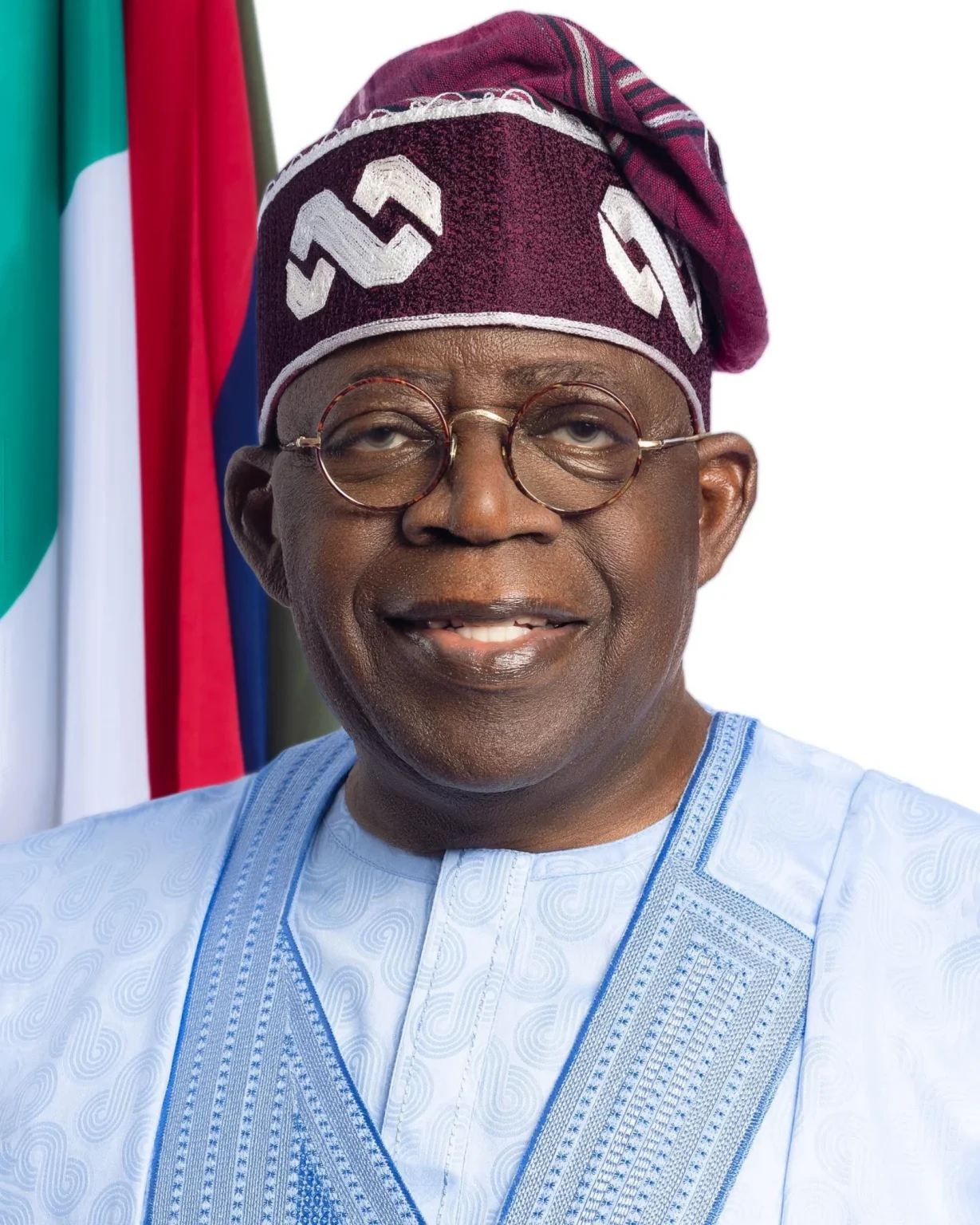



President Bola Tinubu has urged Nigerians living abroad to move beyond sending remittances home and take a more active role in building productive investments in Nigeria’s economy.
Tinubu made the call while declaring open the three-day Nigeria Diaspora Economic Conference (NIDEC) 2026 at the Apollo Convention Centre in Toronto, Canada.
Represented by his Chief of Staff, Femi Gbajabiamila, the President described Nigerians in the diaspora as evidence of the ability of Nigerians to compete and excel globally.
“Nigeria sees you. Nigeria values you. Nigeria needs you,” Tinubu said, according to the Director of Media, Public Relations and Protocols at the Nigerians in Diaspora Commission (NiDCOM), Abdur-Rahman Balogun.
The President acknowledged that economic growth, political stability and security are key considerations for investors but argued that Nigeria’s current economic indicators point to a country undergoing genuine recovery.
He cited real Gross Domestic Product growth of 3.89 per cent in the first quarter of 2026, a 3.29 per cent expansion in manufacturing, a decline in inflation to 15.91 per cent and foreign reserves of $45.4 billion at the end of 2025.
Tinubu also noted that the International Monetary Fund had projected Nigeria’s economy to grow by 4.1 per cent in 2026, attributing the improved macroeconomic outlook to reforms implemented by his administration over the past three years.
He added that the World Bank had recognised progress in restoring macroeconomic stability, strengthening the country’s external and fiscal position and sustaining economic growth.
On domestic reforms, Tinubu highlighted the government’s new tax architecture, which he said was designed to simplify compliance and reduce the burden on low-income earners and small businesses.
He also disclosed that the Bank of Industry recorded its highest annual financing volume in 2025, disbursing N636 billion to businesses across the country.
According to the President, the Federal Government is also continuing investments in roads, railways, ports, electricity, digital infrastructure, healthcare, housing and agricultural value chains.
Tinubu said diaspora remittances remain crucial to millions of Nigerian households, helping families meet expenses such as school fees, medical bills and small-business needs. However, he argued that remittances should serve as the starting point, rather than the limit, of diaspora engagement with Nigeria.
He urged Nigerians abroad to invest in sectors including agro-processing, healthcare, technology, energy, housing, logistics, mining, education, creative industries and export manufacturing.
The President also encouraged diaspora investors to move away from scattered and personality-driven transactions by forming professionally managed investment clubs, sector-specific funds, co-investment vehicles and venture networks.
He urged potential investors to pool capital, demand audited financial statements, insist on strong corporate governance and conduct proper due diligence with reputable professional advisers.
Tinubu said the government, on its part, had a responsibility to provide Nigerians in the diaspora with predictable regulations, transparent project pipelines, efficient consular services and stronger protection against fraud.
He identified the Non-Resident Nigerian Ordinary Account, Non-Resident Nigerian Investment Account and Non-Resident Bank Verification Number as practical measures aimed at making it easier for Nigerians abroad to participate in the domestic financial system.
Reflecting on the challenges Nigerians face in foreign countries, Tinubu described what he called an invisible ceiling that can limit how far talented Nigerians rise within foreign systems.
He, however, urged Nigerians in the diaspora to consider investing at home, saying there was no such ceiling in Nigeria and that “the sky is the limit.”
The President also called for unity ahead of the 2027 general elections, stressing that political competition was an essential feature of democracy but should not be allowed to undermine the country’s stability.
In her remarks, the Chairman and Chief Executive Officer of NiDCOM, Abike Dabiri-Erewa, said the conference provided an opportunity to deepen engagement with Nigerians in the diaspora and harness their expertise for national development and faster economic growth.
Dabiri-Erewa also urged Nigerians abroad to view Nigeria not only as their home but as a viable destination for investment.