





Introduction
Nigeria is bleeding. In 2024, 2,452 individuals were kidnapped across the country— a 31% rise from the previous year. In the first four months of 2026 alone, Amnesty International reported at least 1,100 abductions. Bandit attacks, terrorism, communal clashes, and kidnapping syndicates have turned vast swathes of the country into theatres of fear.
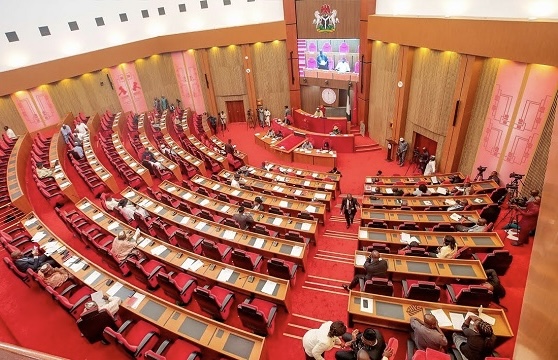
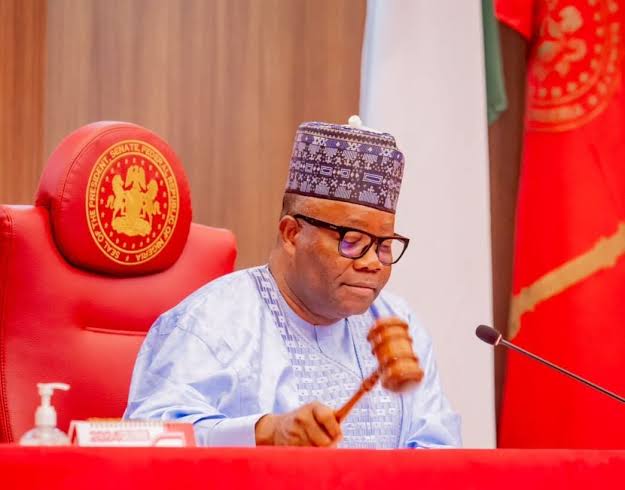
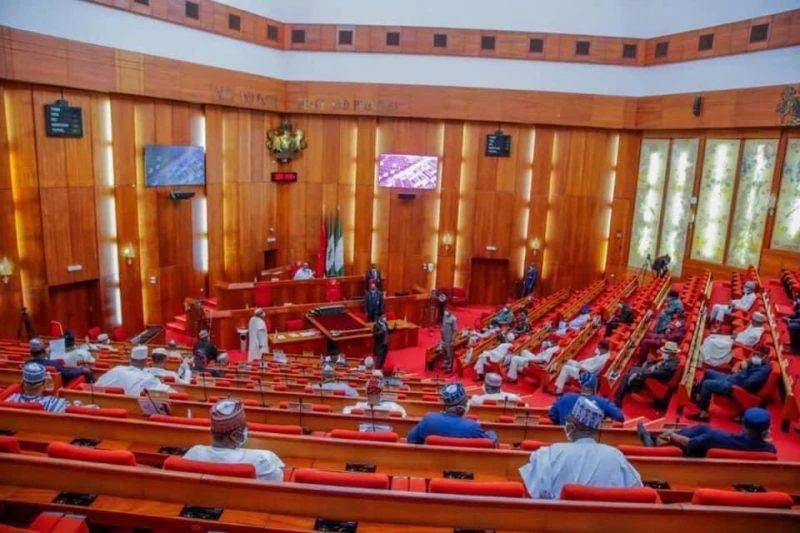
Faced with this escalating crisis, the Nigerian Senate passed a landmark bill in June 2026 to allow states to establish their own Police Forces, moving policing from the Exclusive Legislative List to the Concurrent Legislative List. The question now before the nation is profound: Can state police be the panacea to Nigeria’s rising insecurity?
The short answer is no —not by itself. But under carefully designed conditions, it could be a powerful tool in a broader security overhaul. As one analyst put it, state police is “not a silver bullet, but a conditional panacea”.
The Case for State Police: Why the Current System Has Failed
A Broken Centralized Model
Nigeria’s policing structure is one of the most centralised in the world. The Nigeria Police Force (NPF), with approximately 371,800 officers serving about 236.7 million people, operates at a ratio of roughly 1:636—far below the UN benchmark of 1:450. Over 100,000 officers are reportedly assigned to VIP or static duties, further depleting grassroots presence.
Operational decisions, recruitment, deployment, and strategic priorities are largely controlled from Abuja.
Commissioners of Police are appointed centrally and accountable primarily to the Inspector-General rather than to state governments. The result? Officers posted far from home, unable to speak local languages or navigate local terrain. Intelligence dries up. Response times stretch from minutes to days.
Diversity of Threats Demands Local Responses
Nigeria’s security challenges have become “too diverse, too localised and too adaptive for a one-size-fits-all policing model”. Banditry in Zamfara is not identical to cult violence in Rivers. Kidnapping along the Abuja-Kaduna corridor differs from farmer-herder conflicts in Benue or piracy in the Niger Delta. A uniform national approach cannot respond effectively to these distinct local realities.
A Global Anomaly
Among 26 federal countries worldwide, Nigeria stands almost alone in concentrating policing authority so overwhelmingly in the hands of the central government.
The United States, Canada, Germany, Australia, and India all operate multi-layered policing arrangements where federal and sub-national forces coexist. Nigeria’s extreme centralisation is a legacy of prolonged military rule, not the logic of federalism.
Public Support and Political Momentum
A nationwide survey conducted in November 2025 found that 70% of Nigerians support the establishment of state police alongside the Federal Police. Both Southern and Northern governors have endorsed the reform, transforming it from a regional demand into a national agenda. Some advocates believe insecurity could be substantially resolved within six months if state police is effectively implemented.
The Case Against State Police: Legitimate Fears and Structural Risks
The Danger of Political Weaponisation
The principal concern is not policing itself but political abuse. Nigeria’s political history contains numerous examples of state institutions misused against opponents. Critics fear that state police could become “instruments of political repression in the hands of powerful Governors”—deployed to intimidate opposition parties, harass critics, suppress protests, or interfere with elections.
A retired Commissioner of Police warned that state police will be “subject to abuse by governors who pay them, irrespective of the checks and balances”. The Conference of United Political Parties (CUPP) cautioned that “poorly implemented State Police could be vulnerable to abuse, including political weaponisation, election interference, or suppression of opposition”.
The Fiscal Reality
The cost of establishing state police is staggering. A technical committee estimated that setting up state police across the federation will cost between N589 billion and N813 billion over five years. A medium-sized state with five million residents could require nearly N50 billion simply to recruit, train, and equip a police force—excluding infrastructure, salaries, vehicles, and technology.
Many states already struggle to pay the national minimum wage. Over 20 states have faced challenges paying salaries, with local government allocations often diverted. If states are already stretched to meet basic governance obligations, how can they suddenly fund police forces?
The grim reality: unpaid Police Officers become susceptible to corruption, bribery, and extortion. In extreme cases, disgruntled officers may collude with criminals or turn their weapons against citizens.
Operational Fragmentation and Lack of Uniformity
Thirty-six separate police forces that do not share databases or joint commands could lead to balkanisation rather than security reform. Criminals don’t respect state lines—bandits fleeing Sokoto can set up in Kebbi if coordination is weak. Without uniform training standards, Nigeria risks having “first-class police in Lagos and third-class police in Gombe”.
Ethnic and Minority Concerns
Nigeria is a federation of over 250 ethnic groups. In diverse states like Benue, Plateau, and Nasarawa, there are fears that governors might recruit predominantly from their own ethnic groups, leaving minorities vulnerable to discrimination or persecution.
Can State Police Work? The Conditions for Success
State police is not inherently a panacea—but it could be transformative if accompanied by robust safeguards. Analysts and experts have outlined several non-negotiable conditions:
- Constitutional Clarity and Jurisdictional Boundaries
The Constitution must clearly spell out jurisdictional boundaries. Federal police should retain control over terrorism, cybercrime, interstate kidnapping, and elections. State police should handle community crime, traffic, and first response.
A National Policing Standards Commission
There must be a National Policing Standards Commission to enforce one training curriculum, one firearms policy, and one code of conduct nationwide. This would prevent the fragmentation and quality disparities that critics fear.
Strong Oversight Mechanisms
The proposed legislation attempts to build safeguards: state police service commissions must include representatives of the Nigerian Bar Association, the Nigerian Union of Journalists, the Nigeria Labour Congress, traditional rulers, and human rights bodies. The National Police Council must remain involved in vetting and appointments.
However, as one commentator noted, “Nigerians have learnt to be suspicious of paper assurances. Our country has never suffered from a shortage of beautiful laws. Our difficulty lies in implementation and institutional culture”.
Fiscal Sustainability and Accountability
States must demonstrate fiscal capacity before establishing police forces.
The federal government may need to provide transitional funding or establish a Police Trust Fund to ensure minimum standards across all states. Without sustainable funding, state police will collapse— or worse, become corrupt and predatory.
Strengthened Local Governments
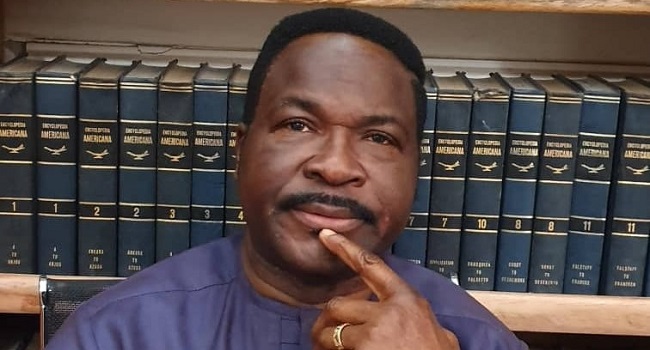
Monday Ubani warned that state police “may fail without strong local governments”. Critics have warned that state police could be transformed into instruments of political intimidation, electoral manipulation, and suppression of dissent.
Robust local government autonomy and accountability mechanisms are essential counterweights.
Beyond Policing: Addressing Root Causes
Perhaps the most critical insight is that police alone cannot solve Nigeria’s insecurity. As one analyst observed:
“Nigeria’s insecurity is fed by poverty, injustice, and a failing federal system. Police don’t create jobs. They don’t speed up courts. State police will fail if millions of youths remain unemployed; if courts take 8 years to convict a kidnapper”.
The current challenges confronting Nigeria’s security sector are “not primarily the absence of State Police, but inadequate funding, insufficient equipment, poor welfare, limited technological capabilities, weak intelligence infrastructure, and gaps in operational capacity”.
Creating another policing structure without first addressing these fundamental deficiencies risks “multiplying existing problems rather than solving them”.
Conclusion: A Necessary Risk, Not a Magic Bullet
State police has reached “that threshold in Nigeria” where an idea once considered controversial has become inevitable. The centralised policing model is broken. It cannot secure a nation of over 230 million people across nearly one million square kilometres.
But state police is not a panacea. It is a tool—and like any tool, its effectiveness depends on the hands that wield it and the safeguards that constrain it. Without fiscal sustainability, it will collapse. Without oversight, it will be abused. Without coordination, it will fragment. Without addressing poverty, injustice, and unemployment, it will fail.
The question is not whether Nigeria should have state police, but how it should be designed, funded, and governed. The Senate has taken the first step. The real work—building the institutions, safeguards, and fiscal frameworks that will determine success or failure—has only just begun.
As one commentator wisely concluded: “State police will not magically end insecurity. It is not a silver bullet. At best, it is a sharper tool. And a sharper tool in untrained hands cuts the wrong way”.
‘NIYI ADELEKE
Proclaimed Media House