

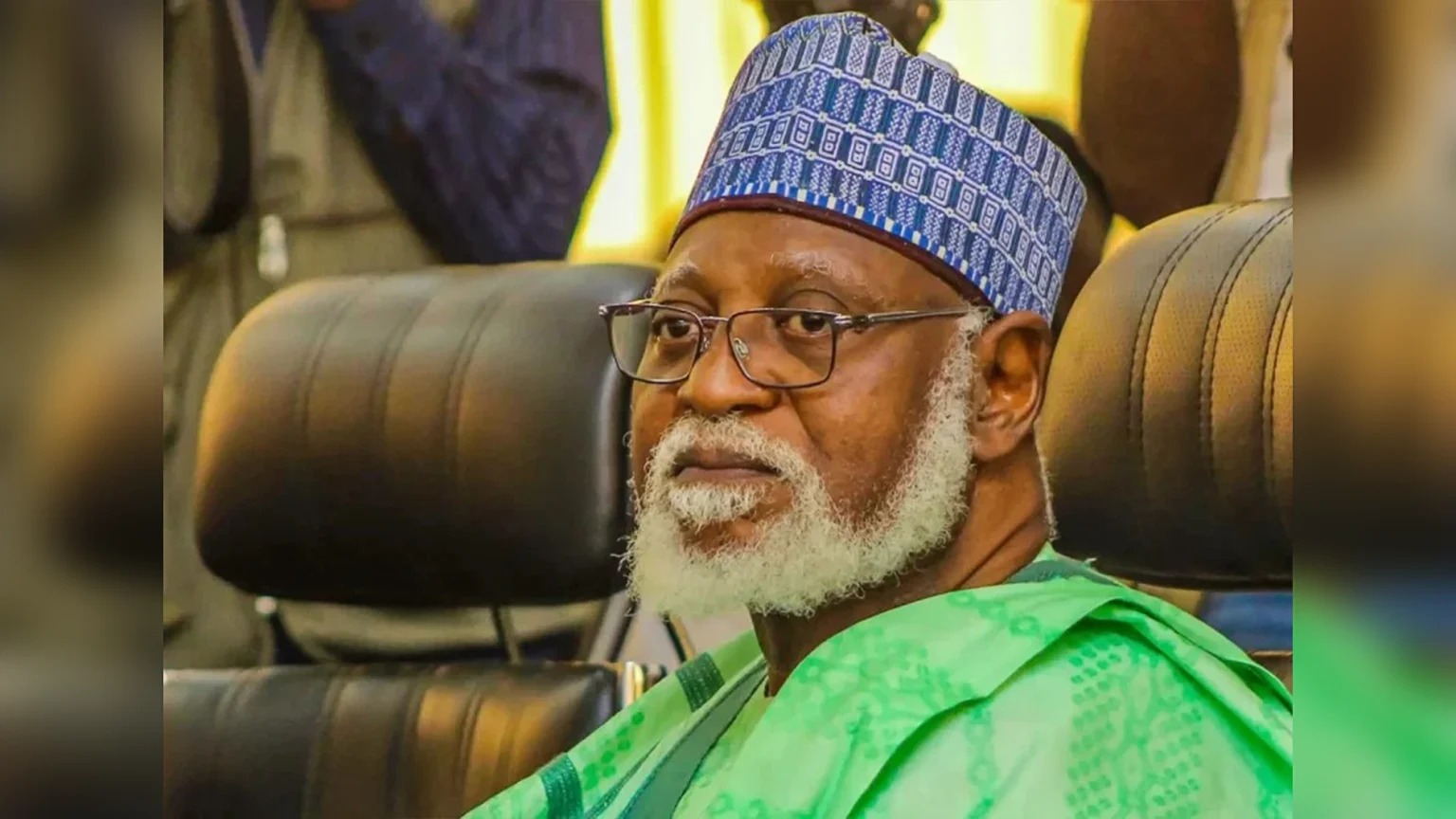
A Former Head of State, Gen. Abdulsalami Abubakar (retd.), said the hours surrounding the death of Gen. Sani Abacha on June 8, 1998, left him with a lingering sense that “something was fishy.”
He disclosed that he and the late Chief of Army Staff, Lt-Gen. Ishaya Bamaiyi, were mysteriously locked inside a waiting room at the Presidential Villa for nearly an hour before being informed that the Head of State had died.
The revelations are contained in Chapter 19 of Abubakar’s 264-page, 27-chapter autobiography titled ‘Call of Duty,’ obtained by our correspondent on Saturday at the public presentation of the book and two others at the Aso Rock Villa, Abuja.
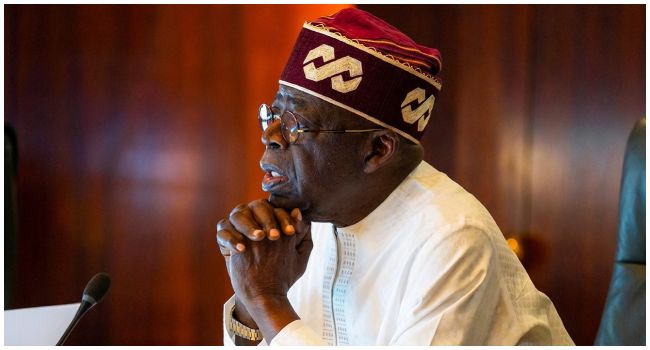
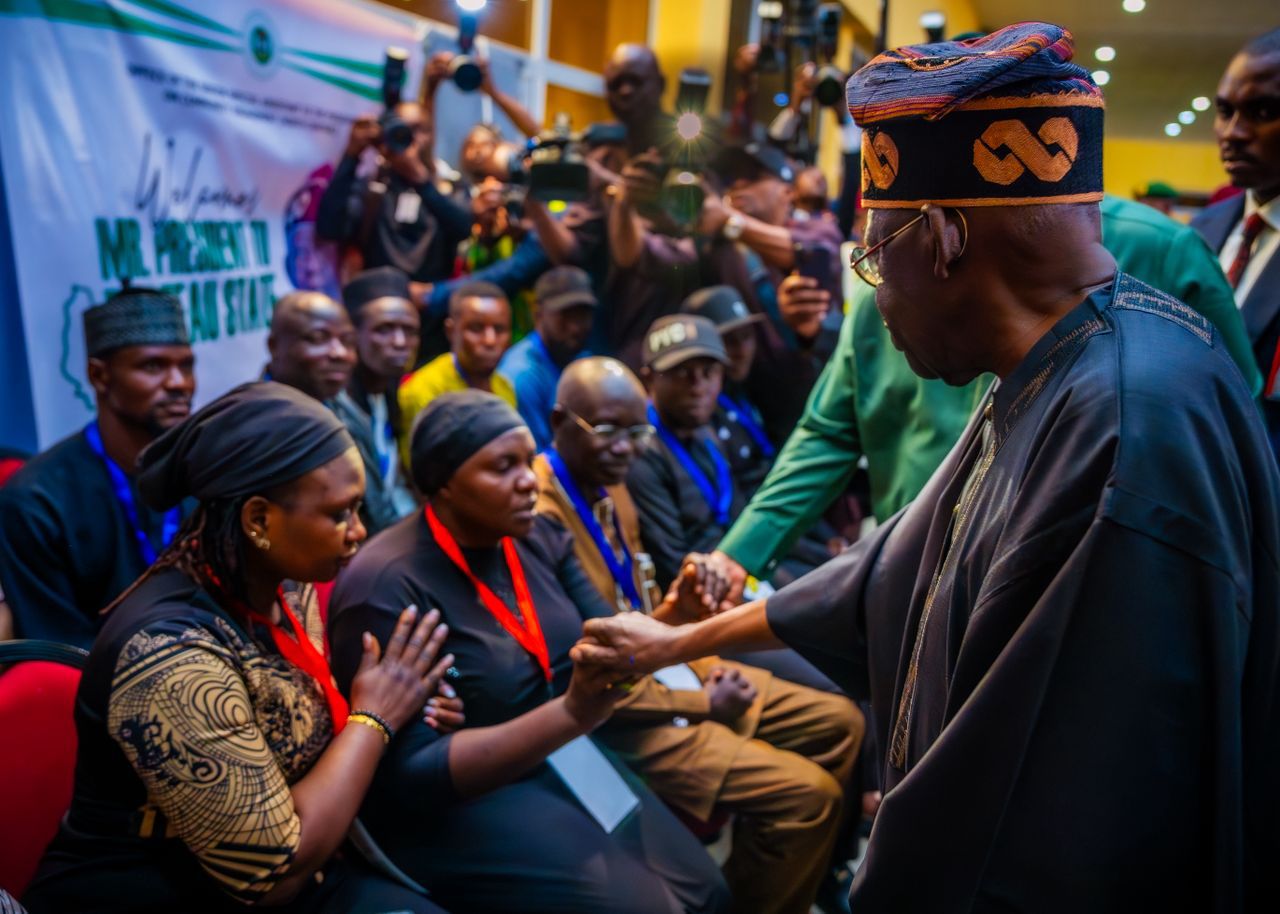
The presentation was held to mark the former Head of State’s 84th birthday and was attended by President Bola Tinubu who was represented by Vice President Kashim Shettima as Special Guest of Honour.
Abubakar wrote that the chain of events began with a phone call on the morning of Monday, June 8, 1998, while he was waiting to be informed about his own impending retirement from the military after 35 years of service.
He wrote, “On Monday, 8 June, I was waiting for him concerning the assignment he said he had for me. I received a call very early in the morning that he was going to be retired. There was no other way to interpret that.
“I quietly prayed that he would not send me to Togo where there was going to be an ECOWAS summit. I was tired of going everywhere.
“ I was effectively in detention, I didn’t want to travel to Togo. I told my wife I was not happy with the call because I was still hoping I wouldn’t have to travel to Togo.”
Later that morning, he received another instruction to meet the Head of State.
“As I entered the bathroom, there was another call. I was told that the Head of State wanted to see me.
“Out of frustration, I asked if it was travelling to Togo and the caller replied that it was on a different issue.
“Because of the urgency, I didn’t wear my uniform. I wore a tracksuit and slippers and proceeded to the Presidential Villa. On getting to his residence, I was told he was not in the office,” he stated.
At the Villa, Abubakar said he could not make sense of events that followed as they were strange.
He narrated, “One of the guards informed me that anytime I went to see him, regardless of who was with him, I would still go in. After waiting for about half an hour, I wondered why he would be that early in the office.
“As I was climbing the stairs, (One of the guards informed me) that Abacha said I should stay in the waiting room. What struck me was that Abacha said I should stay in the waiting room.
“Major-General Ishaya Bamaiyi joined me shortly after. We waited for about an hour. I decided to go and see Abacha by any means because I could not understand why we should be kept that long.”
According to him, the door of the waiting room had been locked without the knowledge of the two men.
“I asked Bamaiyi if he was aware that we had been locked inside.
“Something kept telling me that something was wrong but I could not place a finger on it,” he stated.
He said when the door was eventually opened, it was not by an aide, but by the country’s most senior police officer.
“After some time, the door was opened and the Inspector-General of Police, Alhaji Ibrahim Coomassie, came in.
He said: ‘Let’s go.’ We walked towards the office and I informed him that I was told Abacha was at the residence.
“It was at this stage that he informed me that Abacha was dead. I was shocked. I asked him what happened and he insisted we proceed first. He did not tell me anything else,” said the former Head of State.
Abubakar described arriving at Abacha’s residence and being confronted with the reality of the moment.
According to him, “When we got to the residence, I asked to see Abacha’s body. I was told it was inside. I entered the room and removed the covering.
“I was in shock at the sudden development. I prayed for him and left the room. Then lots of conversations began.”
He recalled the chaotic scene and conversations surrounding succession that unfolded around him as senior figures converged on the residence.
“I saw a lot of people coming in. I saw Al-Mustapha. I am not sure I saw Brigadier-General Ibrahim Sabo, the Director of Military Intelligence.
“I remember Alhaji Babagana Kingibe was there. The Chief Justice of Nigeria, Justice Muhammadu Uwais, was there as well.
“We deliberated on how to break the news to the world. The CJN said the first thing was the appointment of a new Head of State to avoid a vacuum before informing Nigerians,” said Abubakar.
Abubakar accused the top brass of the military, what he called Abacha’s “inner caucus” at the Villa of being more concerned with succession politics than with the late Head of State’s burial.
He disclosed that they had already begun manoeuvring before he and other Provisional Ruling Council members were even informed.
“It then occurred to me that all along, some of those we met at the Presidential Villa, the so-called ‘inner caucus’, were not even involved in preparations for the burial.
“They were more interested in who was going to be the next Head of State. Bamaiyi and I would not be involved in the process, according to their plan.
“They were preparing to pick the new Head of State from among themselves,” he recounted.
Abubakar recalled presiding over the Provisional Ruling Council meeting that followed, in his capacity as Chief of Defence Staff and the most senior officer in the military hierarchy.
He said, “As the Chief of Defence Staff and next in hierarchy to the Commander-in-Chief, the No. 2 position was vacant following the removal of General Diya, over an alleged coup, I chaired the PRC meeting.
“I went home to change my tracksuit for the military uniform. After initial deliberations, I informed the meeting that one, General Abacha had passed away; two, the family wanted him to be buried in Kano; three, the CJN had advised that we could not leave a vacuum, hence the need to have a new Head of State.”
The deliberations, he said, quickly grew tense and lost focus.
“We began discussions and were not anywhere near reaching a conclusion. It was getting late. Someone who had his own idea complained that we all knew the tenets of Islam and instead of going to bury Abacha, we were busying talking about who was going to be the next Head of State.
“I immediately pointed out to him that it was not our idea but it was state protocol. We then agreed to break and go for the burial and converge afterwards,” he narrated.
The burial trip to Kano, Abubakar revealed, was engineered to keep him and other key actors away from Abuja while a succession plan was finalised in their absence.
According to him, “We went to Kano around 2am. Little did we know that the ‘inner caucus’ had got wind that something was fishy. They had left officers on the ground with instructions that they should not allow any drama.
“We did not sleep that night. We returned to Abuja around midnight and resumed that night. Little did we know that the burial was just a decoy to perfect whatever they had up their sleeves.
“While we were in Kano, they were already preparing to swear in their preferred choice, Admiral Mike Akhigbe, the Chief of Naval Staff, and Major-General Sarki Muktar, who was GOC of 1 Division, had got wind that something was fishy.”
Abubakar further described what he called a direct contest between himself and Bamaiyi for the position.
“All the GOCs, FOCs, AOCs and members of the PRC were in attendance. The PRC didn’t have civilian members but for the SGF and secretariat staff who were taking minutes of the meeting.
“There were people who wanted Major-General Bamaiyi to be the Head of State. Before we returned from Kano, some approached me to make a case for him but I waved them off. Still, Abacha recognised me as one of the insiders.
“The contest was directly between Lt-General Useni and me, being the two most senior officers in military affairs, although Useni was no longer involved in military affairs. I was senior to Bamaiyi but he was next in hierarchy as next in hierarchy. I was senior to Useni and me, being the two most senior officers in military affairs. I won the vote. That was how I became the 11th Nigerian Head of State,” he narrated.
Saturday’s event, themed ‘The Legacy of a Statesman @84,’ featured the public presentation of three books in honour of Gen. Abubakar’s 84th birthday.
They include ‘Call of Duty: An Autobiography of Gen. Abdulsalami Alhaji Abubakar,’ with a foreword by former military President Gen. Ibrahim Babangida; ‘Nigeria’s Grand Patriot: Gen. Abdulsalami Alhaji Abubakar,’ reviewed by Professor Ussuji Medaner; and ‘Mediating for Peace in Africa: A Festschrift in Honour of Gen. Abdulsalami Abubakar,’ reviewed by Professor Ibrahim Gambari, CFR.
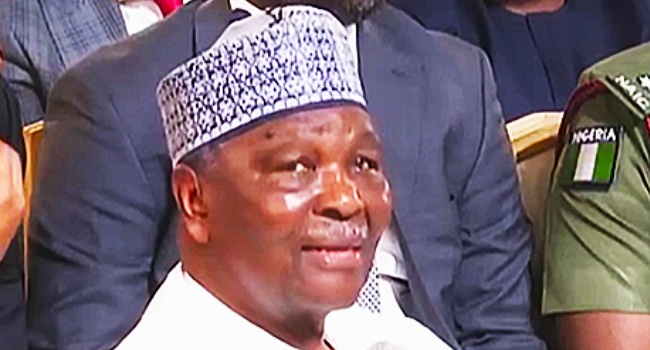
The event was chaired by Gen. Yakubu Gowon, GCFR, with a keynote address on “Democratic Transition and Peace Building in Africa: The Place of General Abdulsalami Alhaji Abubakar” delivered by former South African President Thabo Mbeki.
The programme also featured the unveiling of the Abdulsalami Abubakar African Resource Centre.
Abacha died on June 8, 1998, after about five years in power that began in November 1993, months after the annulment of the June 12, 1993 presidential election.
Abubakar, who succeeded him, oversaw Nigeria’s transition to civilian rule, handing over to President Olusegun Obasanjo on May 29, 1999.